Choosing a roofing material in Poland means weighing factors that are less relevant in milder Atlantic climates: sustained sub-zero temperatures that persist for weeks, spring freeze-thaw cycles that stress masonry and lap joints, and snow loads that in some highland regions reach 200 kg/m² or more. Getting this decision right affects not just the roof's lifespan but also the structural load on the supporting rafters, the difficulty of future maintenance, and energy performance through the attic floor.
This article compares the four material categories most commonly found on Polish residential roofs: fired ceramic tiles, concrete tiles, standing-seam and profiled metal sheets, and the membrane systems used on flat or low-pitch roofs.
Ceramic Fired Tiles
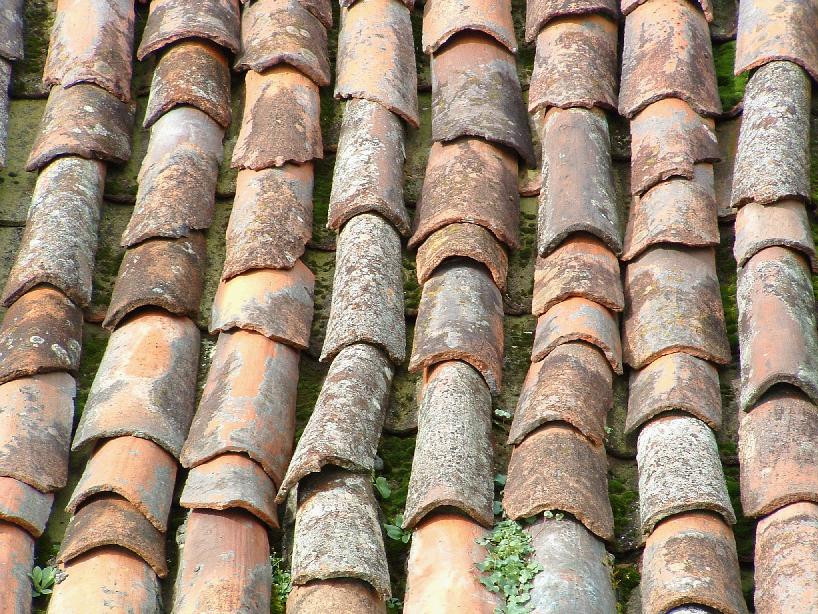
Ceramic roof tiles have been produced in Poland continuously since the nineteenth century. The fired clay body achieves a frost resistance classification of F2 (tested to 200 freeze-thaw cycles) under EN 539-2, making them inherently well suited to the Polish climate. Water absorption in quality tiles runs below 6%, which limits the volume of ice that can form inside the tile body during a freeze cycle.
The primary practical disadvantage is weight. Ceramic tiles typically weigh between 40 and 50 kg/m², which means the roof structure must be designed — or assessed and potentially reinforced — to carry this load. For a 150 m² roof plane this adds six to seven tonnes compared with a metal alternative. On existing structures built to older standards, this is worth verifying with a structural engineer before proceeding.
Key figures for ceramic tiles: Weight 40–50 kg/m² · Frost resistance F2 (EN 539-2) · Water absorption <6% · Expected lifespan 50–100+ years with maintenance · Requires battens at 300–380 mm centres depending on tile profile.
Installation requires a minimum pitch of 22° for most profiled ceramic tiles, rising to 30° for flat interlocking types. Below these thresholds, driven rain and snow melt can work under the lap. In practice most Polish pitched roofs sit at 35–45°, which is within the comfortable operating range.
The long expected lifespan — 50 to well over 100 years for quality products from producers such as Röben, Creaton, or Edilians — makes the higher upfront cost per m² worthwhile over the full building lifecycle. Replacement is tile-by-tile rather than a full stripping job, provided the battens and underlay remain sound.
Concrete Tiles
Concrete tiles are the lower-cost alternative to ceramic and dominate the mid-market segment in Poland. They are tested to the same EN 1304 standard and classified for frost resistance in the same way. The relevant difference is that concrete is more porous at the surface — new concrete tiles absorb water more readily than a well-fired ceramic body — and the acrylic factory coating that provides weather resistance degrades over roughly 15–25 years, after which moss colonisation and surface erosion accelerate.
Weight is comparable to ceramic: typically 42–52 kg/m² depending on the profile. Structural implications are the same.
From a lifecycle perspective, concrete tiles on a well-ventilated roof with good underlay will perform reliably for 30–50 years. After that, replacement cost needs to be factored against the original saving. On a tight initial budget where the roof will be replaced during a future renovation anyway, concrete tiles are a rational choice. On a house intended to remain in the family for generations, ceramic is generally the better long-term position.
Marley, Bramac, and Benders all supply concrete tiles to the Polish market with local distribution networks.
Metal Roofing
Metal roofing — primarily steel sheet with polyester, PVDF, or stone-chip coating, and to a lesser extent zinc or copper — has grown steadily in market share on Polish residential roofs since the 1990s. The main driver is weight: a standing-seam steel system weighs 4–6 kg/m², roughly one-tenth of a tiled roof. This makes metal the default choice for extension roofs added to existing buildings where the supporting structure was not designed for tile loads, and for agricultural or industrial buildings where cost-per-m² dominates.
Key figures for steel metal roofing: Weight 4–6 kg/m² · Minimum pitch 3° (standing seam), 12° (trapezoidal profile) · Lifespan dependent on coating: 20–30 years (polyester), 40–50 years (PVDF or stone-chip) · Thermal noise during rain and hail is a functional consideration in living spaces.
The coating system is the critical variable. Standard polyester coatings begin showing chalking and micro-cracking in the Polish UV and temperature cycle from around 20 years. PVDF-based coatings (sold as Hyper or Ultramax by major suppliers) carry 30-to-40-year guarantees. Stone-chip coated tiles (Gerard, Decra) sit between the two in both cost and longevity — they also reduce acoustic transmission, which is a noticeable advantage.
For standing-seam zinc or copper, the long-term position is different: a properly detailed zinc roof with ventilated underlay will outlast the building. The upfront cost is roughly three to five times that of coated steel, and the material requires specialised bending and joining skills that not every roofing firm in Poland carries.
Thermal expansion is a real consideration in the Polish temperature range (-20°C to +40°C represents a 60°C swing). Concealed fix systems that allow sheet movement outperform exposed-fix systems in this regard, and the difference is visible in cracked sealant around fasteners on older visible-fix roofs.
Flat Roof Membranes
Flat and low-pitch roofs (below approximately 5°) cannot use lapped tile or sheet systems and rely instead on fully bonded or mechanically fastened membrane systems. The three main categories in current Polish use are:
Modified Bitumen (SBS/APP)
Bituminous felt modified with styrene-butadiene-styrene (SBS) or atactic polypropylene (APP) polymers dominates the existing stock of flat-roof buildings in Poland, because it was the standard through the communist-era panel-block construction period and the 1990s. SBS-modified felt is flexible at low temperatures and handles freeze-thaw well; APP-modified felt is stiffer but more heat-resistant. A properly applied two-layer system (base sheet mechanically fixed, cap sheet torch-applied or self-adhering) should achieve 20–25 years. Single-layer applications, common in lower-budget projects, fail earlier, particularly at seams and upstands.
EPDM Rubber
Ethylene propylene diene monomer rubber membranes are increasingly used on residential flat roofs in Poland. A single 1.5 mm sheet covers large areas without seams, which eliminates the most common failure point in bitumen systems. EPDM is flexible down to -40°C, making it genuinely frost-proof in Polish conditions. Expected lifespan with proper detailing is 40–50 years. The main installation risk is adhesive bond failure at penetrations and perimeter — a well-executed EPDM roof depends heavily on the quality of the edging and termination detail.
TPO and PVC Membranes
Thermoplastic membranes (TPO, PVC) are heat-welded at seams, producing a bond stronger than the base material. They are lighter than bitumen systems and compatible with green roof build-ups. PVC membranes should not be in direct contact with polystyrene insulation (plasticiser migration degrades both materials) — a separator layer is standard practice. TPO does not carry this restriction. Both systems achieve 25–35 year lifespans on correctly specified roofs.
Making the Decision
The choice narrows quickly once the roof geometry and structural context are known. Pitched roofs above 22° with adequate rafter sections can use any tiled or metal option. The budget-versus-lifespan tradeoff between ceramic and concrete is the main remaining variable. Metal is the clear choice where weight is constrained. For flat and low-pitch roofs, EPDM offers the best combination of frost resistance, longevity, and single-layer simplicity for the residential scale.
Polish building regulations (Rozporządzenie Ministra Infrastruktury w sprawie warunków technicznych, jakim powinny odpowiadać budynki) set minimum requirements for roof insulation and vapour control that apply regardless of the covering material. Any replacement project that opens the roof structure should treat this as an opportunity to review the thermal performance of the build-up, not just the surface layer.
Further technical detail on the Polish snow load zoning (Eurocode 1, Annex, national annex PN-EN 1991-1-3) is available from the General Office of Construction Supervision (gunb.gov.pl).
Related reading: If you suspect existing roofing material is contributing to damp or leak problems, the next step is systematic leak detection. For moisture entering through walls and the floor, see the basement waterproofing guide.